Rinjani Volcano
The Complete Guide to Mount Rinjani Trekking, Volcanic Landscapes, and Adventure in Lombok, Indonesia
Rinjani Volcano is one of Indonesia's most extraordinary natural landmarks and a world-famous trekking destination. Located on Lombok Island in West Nusa Tenggara, Mount Rinjani rises 3,726 meters (12,224 feet) above sea level, making it the second-highest volcano in Indonesia.
Surrounded by tropical rainforests, beautiful savannas, dramatic volcanic ridges, and the magnificent Segara Anak crater lake, Rinjani Volcano offers one of the most rewarding mountain adventures in Southeast Asia.
Every year, travelers from around the world visit Lombok to experience the beauty of Mount Rinjani National Park. Some come to challenge themselves with a summit expedition, while others prefer a scenic trek to the crater rim or a multi-day journey to Segara Anak Lake.
But Rinjani Volcano is more than just a trekking destination. It is a remarkable volcanic landscape shaped by thousands of years of geological activity, rich in biodiversity, and deeply connected to the traditions and culture of Lombok's local communities.
This complete Rinjani Volcano guide covers everything you need to know before visiting Mount Rinjani, including its location, volcanic history, trekking routes, summit experiences, best trekking seasons, weather conditions, permits, preparation, and available trekking packages.
1. About Rinjani Volcano
Rinjani Volcano, commonly known as Mount Rinjani or Gunung Rinjani, is an active volcanic complex situated in the northern part of Lombok Island, Indonesia.
With an elevation of 3,726 meters above sea level, Mount Rinjani is the highest mountain in West Nusa Tenggara Province and one of the most recognizable volcanoes in the Indonesian archipelago.
The mountain forms the centerpiece of Mount Rinjani National Park, a protected conservation area containing diverse ecosystems, volcanic formations, and some of Lombok's most spectacular natural scenery.
Its enormous volcanic caldera contains Segara Anak Lake, a beautiful blue crater lake surrounded by steep mountain walls. Within the caldera stands Mount Barujari, a younger active volcanic cone that demonstrates the continuing geological activity of the Rinjani volcanic system.
Rinjani Volcano is also an important feature of the Rinjani-Lombok UNESCO Global Geopark, recognized internationally for its geological heritage, natural ecosystems, and cultural significance.
Rinjani Volcano Quick Facts
| Information | Details |
|---|---|
| Mountain name | Mount Rinjani / Gunung Rinjani |
| Common name | Rinjani Volcano |
| Location | Lombok Island, Indonesia |
| Province | West Nusa Tenggara |
| Summit elevation | 3,726 meters |
| Mountain type | Active volcanic complex |
| Protected area | Mount Rinjani National Park |
| UNESCO recognition | Rinjani-Lombok Global Geopark |
| Crater lake | Segara Anak Lake |
| Active volcanic cone | Mount Barujari |
| Main trekking gateways | Sembalun and Senaru |
| Popular trekking duration | 2–4 days |
| Nearest major airport | Lombok International Airport |
2. Where Is Rinjani Volcano Located?
Rinjani Volcano is located on Lombok Island, approximately east of Bali and west of Sumbawa, within Indonesia's Lesser Sunda Islands.
The mountain dominates the northern landscape of Lombok and can be seen from many parts of the island when the weather is clear.
Mount Rinjani is surrounded by traditional villages, agricultural valleys, tropical forests, and beautiful natural attractions.
The two most popular starting points for Mount Rinjani trekking are Senaru Village and Sembalun Village.
Senaru Village
Senaru is located on the northern slopes of Mount Rinjani and is one of the main gateways to the National Park.
The village is known for its traditional Sasak culture, lush tropical forests, and beautiful waterfalls, including Sendang Gile and Tiu Kelep.
Senaru is the starting point for the popular Senaru Crater Rim trekking route.
It is also a convenient place to stay before a trekking expedition, with local guesthouses, restaurants, and trekking services.
Sembalun Village
Sembalun is located on the eastern side of Mount Rinjani and is surrounded by rolling hills, agricultural fields, and scenic mountain landscapes.
The village serves as the principal starting point for most Mount Rinjani summit trekking expeditions.
Unlike the rainforest landscape of Senaru, the Sembalun trekking route begins through open grasslands and savanna before climbing toward the volcanic crater rim.
3. The Volcanic History of Mount Rinjani
Rinjani Volcano has a fascinating geological history shaped by powerful volcanic eruptions over thousands of years.
One of the most significant events in the region's history was the enormous eruption of the ancient Samalas Volcano in 1257.
This eruption was among the largest volcanic events recorded in the last several thousand years and had effects extending far beyond Lombok.
The eruption contributed to the formation of the massive caldera that now contains Segara Anak Lake.
Over time, new volcanic activity created Mount Barujari, a younger volcanic cone within the caldera.
Today, the volcanic landscape provides a remarkable opportunity to observe the geological forces that have shaped Lombok Island.
Although Mount Rinjani is a popular trekking destination, it remains part of an active volcanic system.
For this reason, trekking activities must follow official National Park regulations and any restrictions related to volcanic activity.
4. Segara Anak Lake – The Heart of Rinjani Volcano
Segara Anak Lake is one of the most famous attractions within the Mount Rinjani volcanic complex.
Located at approximately 2,000 meters above sea level, the lake occupies a large part of the volcanic caldera and is surrounded by dramatic mountain walls.
The name Segara Anak means "Child of the Sea" in the local language, reflecting the lake's remarkable blue appearance.
Its peaceful waters contrast beautifully with the rugged volcanic landscape.
For many trekkers, reaching Segara Anak Lake is one of the highlights of a multi-day Mount Rinjani adventure.
The lake offers spectacular views of Mount Barujari and the surrounding volcanic cliffs.
Natural Hot Springs
Natural geothermal hot springs can be found near Segara Anak Lake.
These springs are heated by underground volcanic activity and are among the natural attractions that make the area unique.
Some trekking itineraries allow visitors to explore the hot springs when access and conditions permit.
Cultural Significance
Segara Anak Lake holds important cultural and spiritual significance for local communities.
Traditional ceremonies and religious activities have taken place around the lake for generations.
Visitors should respect local customs, protected areas, and National Park regulations while exploring this special environment.
5. Mount Rinjani Summit – 3,726 Meters
Reaching the summit of Rinjani Volcano is one of the most challenging and rewarding hiking experiences in Indonesia.
At 3,726 meters above sea level, the summit offers extraordinary panoramic views of Lombok Island, Segara Anak Lake, and the surrounding volcanic landscape.
On exceptionally clear mornings, trekkers may also see distant neighboring islands and mountains.
Most summit trekking expeditions begin from Sembalun Village.
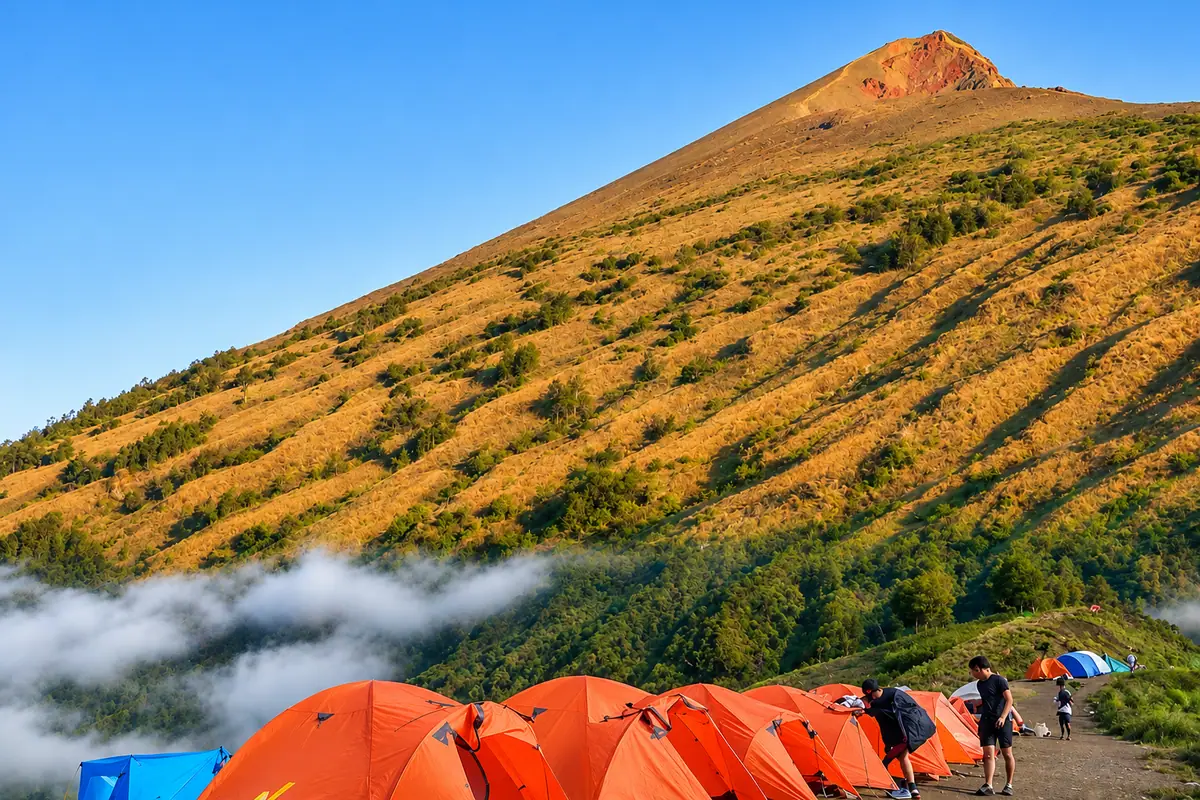
After hiking to Sembalun Crater Rim, trekkers spend the night camping before beginning the final summit ascent in the early morning.
The Summit Challenge
The final ascent is particularly demanding because of steep slopes, loose volcanic gravel, cold temperatures, and high altitude.
Trekkers often begin climbing several hours before sunrise, using headlamps to navigate the dark mountain trail.
The loose volcanic terrain can make progress slow, requiring patience, endurance, and careful footing.
Reaching the summit requires good physical fitness, determination, and appropriate preparation.
The summit should never be considered an easy hike, even for travelers with previous trekking experience.
Sunrise from Mount Rinjani
Watching the sunrise from the summit is one of the most memorable experiences of Mount Rinjani trekking.
As daylight appears, the surrounding volcanic ridges and Segara Anak Lake gradually become visible.
The scenery can be spectacular, but visibility depends entirely on weather conditions.
Reaching the summit is never guaranteed, and safety must always take priority over completing the ascent.
6. Rinjani Volcano Trekking Routes
Mount Rinjani offers several trekking routes, each providing a different perspective of the mountain.
The most popular routes include Sembalun, Senaru, and Torean.
Sembalun Trekking Route
The Sembalun route is the main approach for Mount Rinjani summit expeditions.
The trail begins through beautiful savanna landscapes before climbing toward Sembalun Crater Rim.
As the elevation increases, the terrain becomes steeper and more demanding.
Sembalun Crater Rim serves as the main overnight camping area for summit trekking.
Main highlights:
- Beautiful open savanna
- Mountain and valley scenery
- Sembalun Crater Rim
- Mount Rinjani summit access
- Spectacular sunrise views
This route is best suited to physically fit trekkers who want to attempt the summit.
Senaru Trekking Route
The Senaru route offers a different experience, beginning in the tropical rainforest on the northern side of Mount Rinjani.
The trail passes through dense vegetation before reaching higher mountain terrain and eventually Senaru Crater Rim.
From the crater rim, trekkers can enjoy magnificent views overlooking Segara Anak Lake and Mount Barujari.
Main highlights:
- Tropical rainforest
- Beautiful mountain vegetation
- Senaru Crater Rim
- Segara Anak Lake viewpoints
- Sunrise and sunset scenery
The Senaru route is especially popular with travelers who want to experience Mount Rinjani without attempting the summit.
Torean Trekking Route
The Torean route is famous for its dramatic valleys, waterfalls, rivers, and steep volcanic landscapes.
It offers a unique perspective of Mount Rinjani and is commonly associated with trekking itineraries that include Segara Anak Lake.
However, parts of the route involve narrow mountain paths, steep slopes, and exposed terrain.
Important: The Torean route may be temporarily closed for maintenance or safety reasons. Its availability must be confirmed with Mount Rinjani National Park before planning a trek.
7. Best Rinjani Volcano Trekking Packages
Choosing the right trekking package depends on your fitness level, available time, and preferred experience.
Rinjani Volcano offers different trekking adventures, from crater rim camping to challenging summit expeditions.
Mount Rinjani Summit Trekking – 2 Days 1 Night
This challenging two-day trekking package is designed for adventurous travelers who want to reach the 3,726-meter summit.
The journey begins in Sembalun Village and continues toward Sembalun Crater Rim, where trekkers spend the night camping.
The following morning, the summit ascent begins before sunrise.
After the summit attempt, trekkers descend and return to Sembalun.
Recommended for: Experienced hikers and travelers with excellent physical fitness.
Explore Mount Rinjani Summit Trekking 2 Days 1 Night
Mount Rinjani Trekking – 3 Days 2 Nights Sembalun to Senaru
This three-day trekking package combines some of Mount Rinjani's most spectacular attractions.
The journey begins in Sembalun, includes a summit attempt and a visit to Segara Anak Lake, and finishes in Senaru.
Along the way, trekkers experience open savanna, volcanic ridges, crater lake scenery, and tropical rainforest.
This itinerary offers an excellent opportunity to discover the different landscapes of Mount Rinjani.
Recommended for: Fit travelers seeking a comprehensive mountain adventure.
Explore Mount Rinjani Trekking 3 Days 2 Nights
Mount Rinjani Crater Rim Trekking – 2 Days 1 Night
The Senaru Crater Rim trekking package is a popular alternative to the summit expedition.
Starting in Senaru Village, the route passes through tropical rainforest before reaching the crater rim.
Trekkers camp overnight and enjoy beautiful views of Segara Anak Lake, Mount Barujari, and the surrounding mountains.
This itinerary does not include a summit attempt.
Recommended for: Travelers with good physical fitness who prefer scenic mountain trekking.
Explore Mount Rinjani Crater Rim Trekking 2 Days 1 Night
Mount Rinjani Trekking – 3 Days 2 Nights Sembalun to Torean
This trekking itinerary combines a summit attempt, Segara Anak Lake, and the beautiful landscapes of Torean Valley.
The route is known for its dramatic volcanic scenery, waterfalls, and mountain valleys.
Recommended for: Experienced trekkers looking for diverse landscapes.
Explore Mount Rinjani Sembalun to Torean Trekking
This package is subject to official Torean route access and safety conditions.
8. How Difficult Is Rinjani Volcano Trekking?
Mount Rinjani trekking is physically demanding and should not be underestimated.
The difficulty depends on the selected route, trekking duration, weather conditions, and individual fitness level.
Summit trekking is particularly challenging because of its steep volcanic terrain, significant elevation gain, cold temperatures, and long walking hours.
Even crater rim trekking requires sustained uphill hiking and good physical endurance.
Is Mount Rinjani Suitable for Beginners?
Physically fit beginners may be able to complete selected crater rim itineraries with appropriate preparation and experienced guidance.
However, the two-day summit trek is not recommended for inexperienced hikers without strong fitness and suitable training.
Travelers should evaluate their physical condition honestly before choosing a trekking program.
How to Prepare for Mount Rinjani
Preparation should include regular hiking, cardiovascular exercise, and strengthening the legs.
Walking on hills or stairs while carrying a small backpack can help improve endurance.
Travelers should also prepare appropriate hiking shoes, warm clothing, and waterproof equipment.
Good preparation can make the experience more comfortable and reduce avoidable risks.
9. Best Time to Visit Rinjani Volcano
The main Mount Rinjani trekking season generally runs from April through December, depending on official National Park regulations.
Weather conditions vary throughout the year, and mountain weather can change unexpectedly.
April to May – Green Landscapes
The early trekking season often offers beautiful green scenery following the rainy months.
The mountain vegetation can be particularly attractive, although occasional rainfall is still possible.
June to September – Drier Conditions
These months are generally considered among the most favorable periods for Mount Rinjani trekking.
The weather is often drier, with better opportunities for clear mountain views.
However, cold temperatures and strong winds remain possible at higher elevations.
October to December – Changing Weather
Rainfall becomes more likely toward the end of the trekking season.
Trekking may still be possible when official routes remain open, but visitors should prepare for unpredictable weather.
January to March – Seasonal Closure
Mount Rinjani's main trekking routes are normally closed during this period because of heavy rainfall, trail safety, and conservation measures.
Exact closure and reopening dates are determined by the National Park Authority.
Travelers should always check current regulations before making trekking arrangements.
10. Rinjani Volcano Weather and Temperature
Weather conditions on Mount Rinjani vary significantly with altitude.
While temperatures in Senaru and Sembalun may feel warm during the day, conditions at the crater rim and summit can become very cold.
Early mornings often bring low temperatures, strong winds, and reduced visibility.
Near the summit, temperatures can approach freezing, particularly before sunrise.
Rain, fog, and sudden weather changes can occur even during the dry season.
Trekkers should bring warm layers, waterproof clothing, gloves, and suitable mountain equipment.
Weather forecasts can help with planning, but they cannot guarantee safe conditions on the mountain.
11. What to Pack for Mount Rinjani Trekking
Having the right equipment is essential for a comfortable and safer trekking experience.
Recommended personal equipment includes:
- Comfortable hiking shoes with good grip
- Warm jacket and thermal clothing
- Waterproof rain jacket
- Hiking trousers and comfortable shirts
- Gloves and warm hat
- Headlamp
- Trekking poles
- Small daypack
- Reusable water bottle
- Sunscreen and sunglasses
- Personal medication
- Toiletries and personal essentials
Travelers should confirm which equipment is provided or available to borrow before departure.
For selected Rinjani Volcano trekking arrangements, jackets, headlamps, trekking poles, and gloves may be available to borrow.
12. Mount Rinjani National Park Permits
Visitors entering official Mount Rinjani trekking routes must comply with National Park registration and permit requirements.
Permit availability depends on daily visitor quotas, route access, and official regulations.
Travelers should arrange their trekking permits in advance, particularly during the popular trekking season.
International visitors may need to provide their full name, nationality, and passport number for registration.
Entrance fees and permit regulations may change, so visitors should confirm current requirements before booking.
13. How to Get to Rinjani Volcano
Mount Rinjani can be reached from several popular destinations around Lombok.
From Lombok International Airport
Visitors arriving at Lombok International Airport can travel by private transportation to Senaru or Sembalun.
From Bali
Travelers from Bali can reach Lombok by airplane or ferry before continuing by road to the trekking starting point.
From the Gili Islands
Visitors staying on Gili Trawangan, Gili Air, or Gili Meno can travel by boat to Bangsal Harbour and continue to Senaru or Sembalun.
From Senggigi and Mataram
Private transportation is available from Senggigi and Mataram to the mountain villages.
Travel times depend on the departure location, traffic, and road conditions.
14. Where to Stay Before Trekking Mount Rinjani
Staying near the trekking starting point before your expedition is highly recommended.
Senaru and Sembalun offer guesthouses, homestays, and other accommodation options.
An overnight stay allows travelers to rest after their journey, prepare their trekking equipment, and receive a briefing before departure.
Senaru is particularly convenient for travelers joining a crater rim trek or a trekking package that includes transportation and pre-trek accommodation.
15. Safety and Travel Insurance
Safety should always be a priority when trekking Rinjani Volcano.
The mountain includes steep slopes, loose volcanic terrain, exposed ridges, and unpredictable weather.
Trekkers should choose an itinerary appropriate for their physical fitness and follow the instructions of experienced local guides.
Travel insurance covering high-altitude trekking and emergency evacuation above 3,000 meters is strongly recommended.
Trekking insurance is not automatically included in every package, so visitors should review their coverage before departure.
Routes and itineraries may need to be changed or canceled when weather, volcanic activity, or trail conditions create safety concerns.
16. Eco-Friendly Trekking and Responsible Tourism
Rinjani Volcano is part of a protected natural environment that supports diverse wildlife, vegetation, and local communities.
Responsible tourism plays an important role in preserving this remarkable landscape.
Visitors can help protect Mount Rinjani by avoiding littering, reducing single-use plastics, respecting wildlife, and staying on designated trekking trails.
All rubbish should be carried out of the National Park and disposed of properly.
Small-Group Trekking Experiences
Rinjani Volcano focuses on small-group trekking experiences, with a maximum of four trekkers per group.
Smaller groups provide a more personal mountain experience and allow guides to give greater attention to individual participants.
Private trekking arrangements are also available upon request.
Responsible trekking helps preserve Mount Rinjani for future generations while supporting local guides, porters, and communities.
17. Frequently Asked Questions About Rinjani Volcano
What is Rinjani Volcano?
Rinjani Volcano is an active volcanic complex located on Lombok Island, Indonesia. Its highest summit reaches 3,726 meters above sea level.
Is Rinjani Volcano active?
Yes. Mount Rinjani is part of an active volcanic system that includes Mount Barujari within the Segara Anak caldera.
Where is Rinjani Volcano located?
Rinjani Volcano is located in northern Lombok, West Nusa Tenggara, Indonesia, east of Bali.
How high is Mount Rinjani?
Mount Rinjani reaches 3,726 meters (12,224 feet) above sea level.
How many days are needed to climb Mount Rinjani?
Popular trekking programs range from two to four days, depending on the route and destinations included.
Can beginners trek Mount Rinjani?
Physically fit beginners may complete selected crater rim treks with suitable preparation. Summit trekking is considerably more demanding.
What is the best month to climb Mount Rinjani?
June through September generally offers favorable dry-season trekking conditions, although mountain weather remains unpredictable.
Can I visit Segara Anak Lake without climbing the summit?
Yes. Selected trekking itineraries allow visitors to reach Segara Anak Lake without attempting the summit, subject to route access.
Is Mount Rinjani open all year?
No. The main trekking routes normally close during part of the rainy season and may also close temporarily for maintenance, conservation, or safety reasons.
Do I need a trekking guide?
Visitors must follow the current Mount Rinjani National Park regulations, including requirements for registered trekking arrangements and guides.
Is Mount Rinjani trekking safe?
Trekking involves natural mountain risks. Proper preparation, suitable equipment, experienced guides, and compliance with official safety restrictions help reduce these risks.
Can I join a small trekking group?
Yes. Rinjani Volcano organizes small-group trekking experiences with a maximum of four participants per group. Private tours are available upon request.
18. Explore Rinjani Volcano with Local Trekking Experts
Rinjani Volcano is more than a mountain destination. It is a place where adventure, natural beauty, geological history, and local culture come together.
From the spectacular 3,726-meter summit to the peaceful waters of Segara Anak Lake, every trekking route offers a unique experience.
Whether you are planning a challenging summit expedition, a scenic crater rim adventure, or a multi-day journey through the volcanic landscapes of Lombok, choosing the right trekking program is essential.
Rinjani Volcano is a locally based trekking operator in Senaru, Lombok, offering organized Mount Rinjani trekking experiences with experienced local guides and porters.
We specialize in small-group trekking with a maximum of four participants, creating a more comfortable and personal experience.
Private trekking tours are also available upon request.
Discover our Mount Rinjani trekking packages and choose the adventure that best matches your interests, fitness level, and available time.
Explore Rinjani Volcano and experience the extraordinary beauty of Mount Rinjani, Lombok, Indonesia.